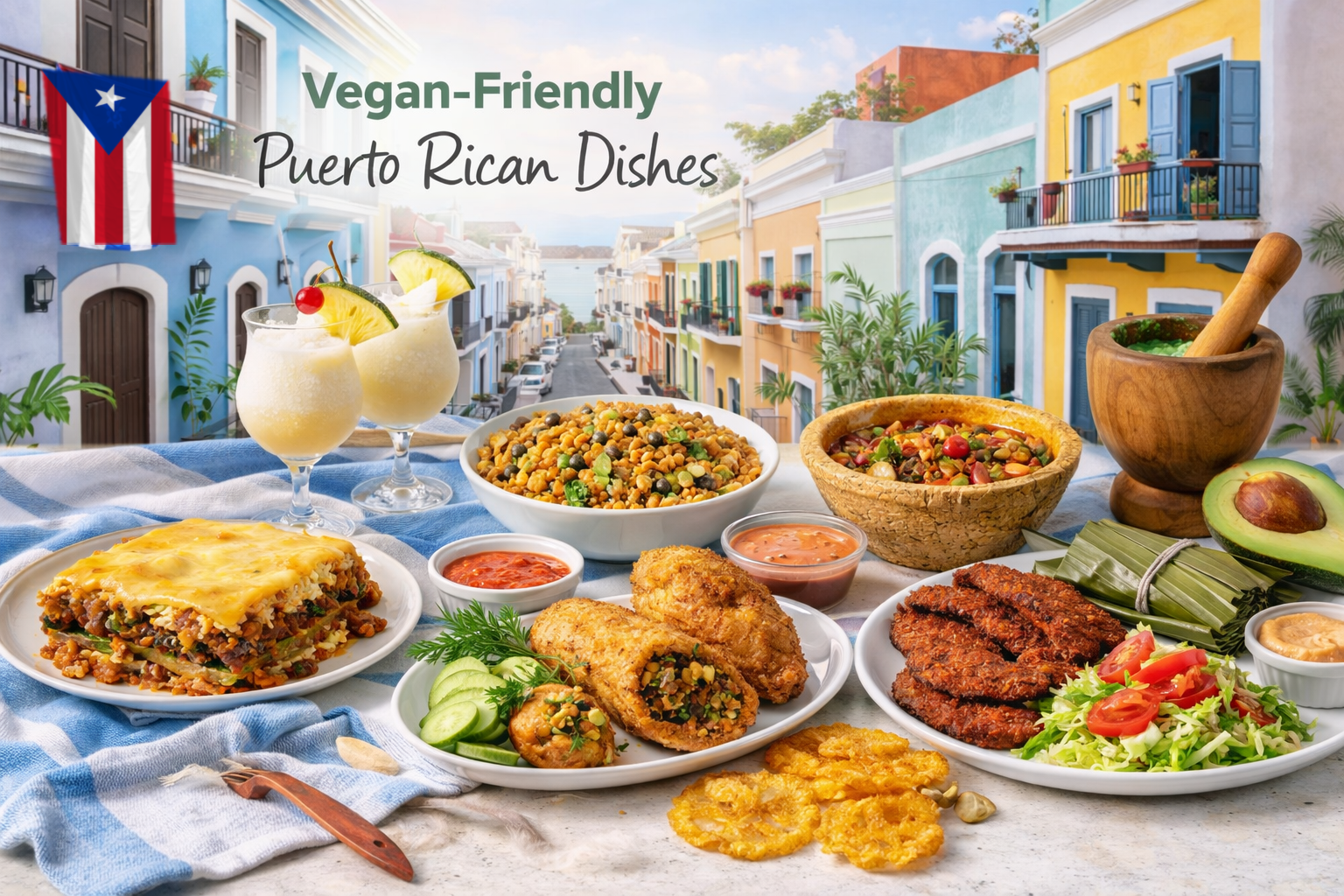
A plantain, rice, bean, or coconut dish can still contain pork, meat broth, dairy, egg, fish, or seafood. Use the dish name to start the conversation, not end it. This guide shows what can change the answer and what to ask before ordering.
Mofongo: ask about what is mashed in and what fills it
Mofongo starts with fried green plantain, but the official Discover Puerto Rico food guide describes traditional preparations that can include salt-cured pork, pork crackling, butter, oil, or broth. It can also be filled with meat or seafood. A vegetable filling alone does not answer how the plantain base was prepared.
Ask: Does the mofongo contain chicharrón, salted pork, butter, or meat broth? Is the filling free of meat, fish, seafood, dairy, and egg?
Rice, pigeon peas, and beans: the animal ingredient may be in the pot
Rice and legumes are plant foods, but the finished dish may not be vegan. Discover Puerto Rico describes beans prepared with ham hock and arroz con gandules that begins with salted pork or ham hock and may use broth. Confirm the whole pot, not only what is visible on the plate.
Ask: Were the rice or beans cooked with ham, salted pork, lard, meat broth, butter, or another animal ingredient?
Alcapurrias, empanadillas, bacalaítos, and pasteles: check the filling first
Traditional fritters and turnovers frequently contain meat, fish, seafood, or cheese. Alcapurrias may have a yuca or yautía base while still carrying an animal filling. Pasteles may use a green-banana or root-vegetable masa but are traditionally filled with pork, chicken, or salted cod. Vegan versions can exist, but the word vegan or a direct ingredient confirmation must do the work.
Ask: Is this an explicitly vegan version? What is in the filling, masa, seasoning, and frying oil? If shared preparation matters to you, ask about the fryer and utensils too.
Tostones, amarillos, and viandas: simpler bases still need a preparation check
Tostones and amarillos begin with green or ripe plantains. Yuca, yautía, batata, and other viandas also begin as plant ingredients. The remaining questions are how they were cooked and what comes with them.
Ask: Were they cooked in vegetable oil or animal fat? Do the seasoning, sauce, garlic mixture, or toppings contain butter, dairy, egg, meat broth, fish, or seafood? Is the fryer shared?
Tembleque and coquito: coconut does not settle the dairy question
Tembleque is a coconut custard, while traditional coquito commonly combines coconut with evaporated and condensed milk. Recipes vary, so do not use coconut in the name as proof that the finished dessert or drink is dairy-free or vegan.
Ask: Does it contain dairy milk, condensed milk, evaporated milk, butter, egg, gelatin, or honey?
Four useful questions in Spanish
- ¿Este plato es completamente vegano, sin carne, pescado, mariscos, lácteos, huevo ni miel?
Is this dish completely vegan, without meat, fish, seafood, dairy, egg, or honey? - ¿El arroz o las habichuelas llevan jamón, caldo de carne o manteca?
Do the rice or beans contain ham, meat broth, or lard? - ¿El mofongo lleva chicharrón, mantequilla o caldo de carne?
Does the mofongo contain pork crackling, butter, or meat broth? - ¿Usan la misma freidora o plancha para carne, pescado o mariscos?
Do you use the same fryer or griddle for meat, fish, or seafood?
Find a place, then verify the dish
Use the directory to find a place with a current source record, then confirm the exact dish when you order. A directory classification cannot guarantee a day's ingredients, staff process, or shared equipment.
Read how GoVeganPR classifies and refreshes evidence, or send a correction with a current source.