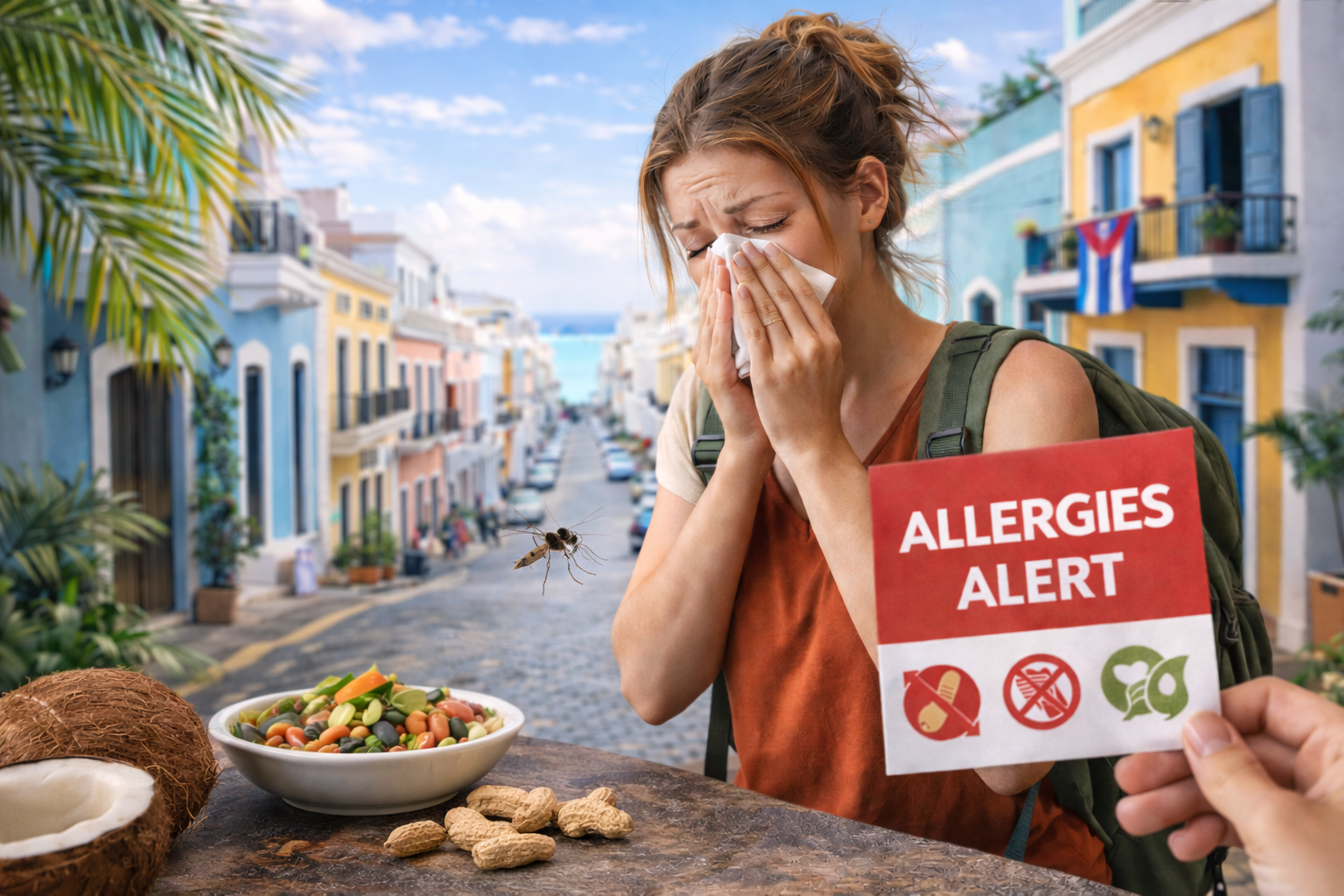
Puerto Rico can be an amazing trip as a vegan — even if you’re also gluten-free, nut-free, or soy-free. The key is simple: don’t rely on assumptions. Ask a few clear questions, keep your orders straightforward, and have a backup plan for day trips and beach areas.
Quick reality check (so meals stay low-stress)
- Puerto Rican food is traditionally meat-forward, but many sides and staples can be vegan-friendly.
- Allergies add complexity because ingredients overlap (shared fryers, sauces, breading, blenders).
- Your goal is clarity, not perfection: a few direct questions beat a long explanation every time.
Vegan + gluten-free in Puerto Rico: what works
Many classic staples can fit gluten-free eating — but you still need to confirm how things are cooked and what sauces are used.
Usually safer “base foods” (confirm preparation)
- Arroz (rice) — ask if it’s cooked in broth
- Habichuelas (beans) — ask if they use ham/sausage or broth
- Tostones (fried green plantains) — ask about shared fryer/breading
- Viandas (yuca, yautía, ñame) — great with garlic + olive oil
- Ensalada (salad) — ask for no cheese/creamy dressings
Helpful questions
- “¿Tiene gluten?” (Does it have gluten?)
- “¿Está empanizado?” (Is it breaded?)
- “¿Tiene harina?” (Does it have flour?)
- “¿Usan una freidora separada?” (Do you use a separate fryer?)
Vegan + nut-free: what to watch for
Traditional Puerto Rican meals often don’t rely heavily on nuts, but vegan cafés and modern plant-based menus might.
Higher-risk places for nuts
- Smoothie bowls and blended drinks (shared blenders)
- Desserts and baked goods
- Vegan sauces that use cashews (common)
- Plant milks like almond milk
Helpful questions
- “Tengo alergia a las nueces.” (I’m allergic to nuts.)
- “¿Tiene almendras o cashews?” (Does it have almonds or cashews?)
- “¿Usan la misma licuadora?” (Do you use the same blender?)
Vegan + soy-free: the easiest combo (usually)
Soy-free vegan eating can be surprisingly doable in Puerto Rico because many traditional staples don’t depend on tofu or soy-based products.
Usually soy-free friendly options
- Rice + beans (confirm no meat/broth)
- Viandas (roots) with garlic + olive oil
- Tostones (ask about shared fryer)
- Vegetable sides + avocado
- Fresh fruit and simple salads
Helpful questions
- “¿Tiene soya?” (Does it have soy?)
- “¿Tiene tofu?” (Does it have tofu?)
How to order without sounding “difficult”
The goal is to keep your order simple and specific. You don’t need a long explanation — just a clear “no” list and one or two quick checks.
The “simple plate” formula
When options are unclear, ask for a basic plate you can verify:
- Rice + beans + tostones + salad + avocado
- Confirm the one thing that matters most (gluten/nuts/soy) plus vegan basics (no meat, no cheese, no egg)
Spanish phrases & ordering scripts (copy/paste)
Use the line that matches your priority and keep it short.
Vegan + gluten-free
- “Soy vegano/a y no puedo comer gluten.”
- “¿Tiene harina o está empanizado?”
- “¿Hay contaminación cruzada en la freidora?” (Is there cross-contact in the fryer?)
Vegan + nut-free
- “Soy vegano/a y tengo alergia a las nueces.”
- “¿Tiene almendras o cashews?”
- “¿Usan la misma licuadora?”
Vegan + soy-free
- “Soy vegano/a y no puedo comer soya.”
- “¿Tiene tofu o soya?”
Where it’s easier vs harder (so you plan smart)
Easier (more consistent)
- Sit-down restaurants (more time to ask questions)
- Places with printed menus (ingredients are clearer)
- Areas with more vegan awareness (San Juan is usually the easiest base)
Harder (more unpredictable)
- Food trucks (limited customization)
- Beach kiosks (few vegan options, shared fryers)
- Bakeries (butter/egg/hidden ingredients)
- Late-night stops (choices narrow fast)
If you want the most consistent place to start, use the San Juan directory and build your trip around a few reliable options.
Browse vegan-friendly restaurants in San Juan →
Planning tips that reduce risk (without overthinking)
- Eat one “known safe” meal early so you’re not asking questions while starving.
- Carry one snack you trust for day trips and long walks.
- Keep orders simple (a short ingredient list is easier to verify).
- Use groceries as a safety net if you’re doing beaches or remote areas.
Puerto Rico is absolutely doable as a vegan with allergies — it just takes a little more intention. Ask clearly, keep meals simple, and use San Juan as your reliable base when you can.